The Challenge
Project Overview
As Alfonso Sanahuja, from the Terrassa Health Consortium, states:
During the pandemic, difficult situations arose due to the lack of long-term planning for clinical resources and on-demand equipment. With Hospitals 4.0, we have a tool to anticipate new pandemics and simulate critical scenarios with confidence.
Frederic Gil Banús, Head of MEP and Smart Building at BIM6D, explains:
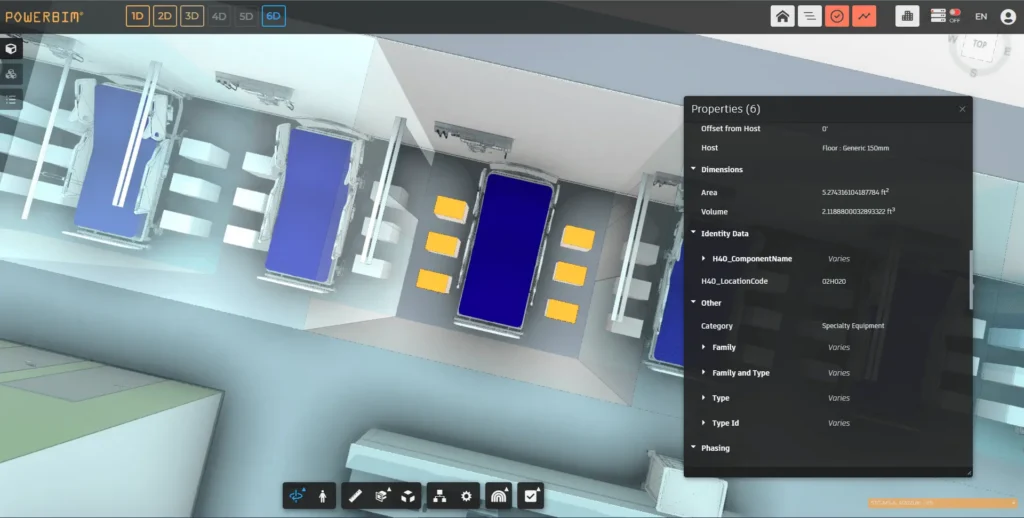
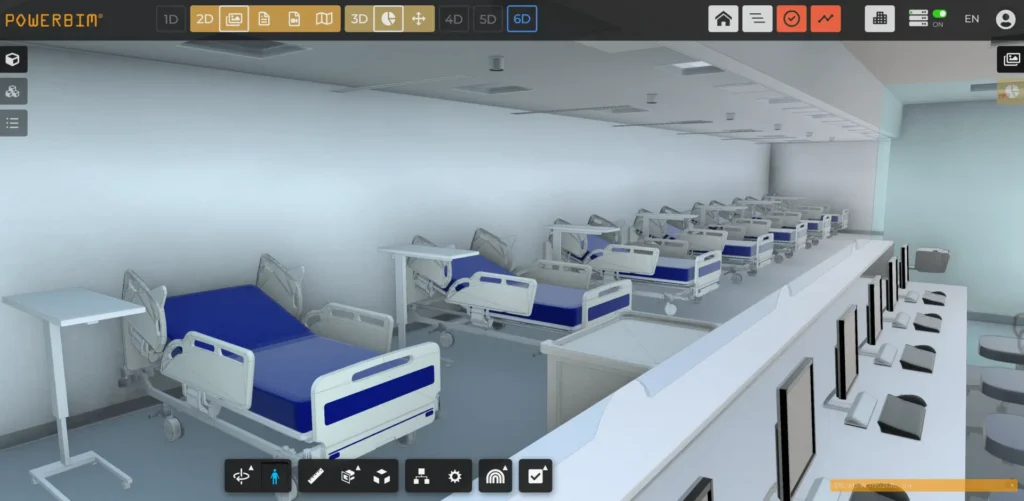
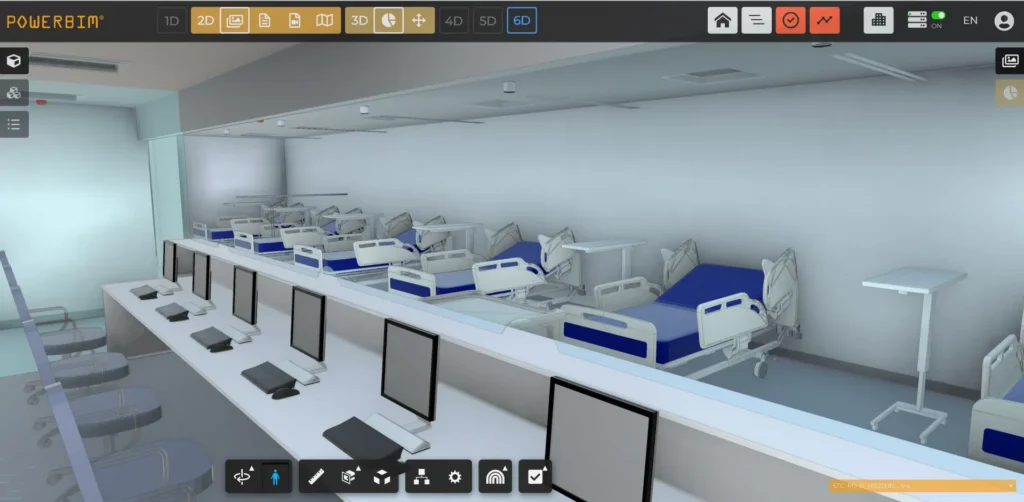
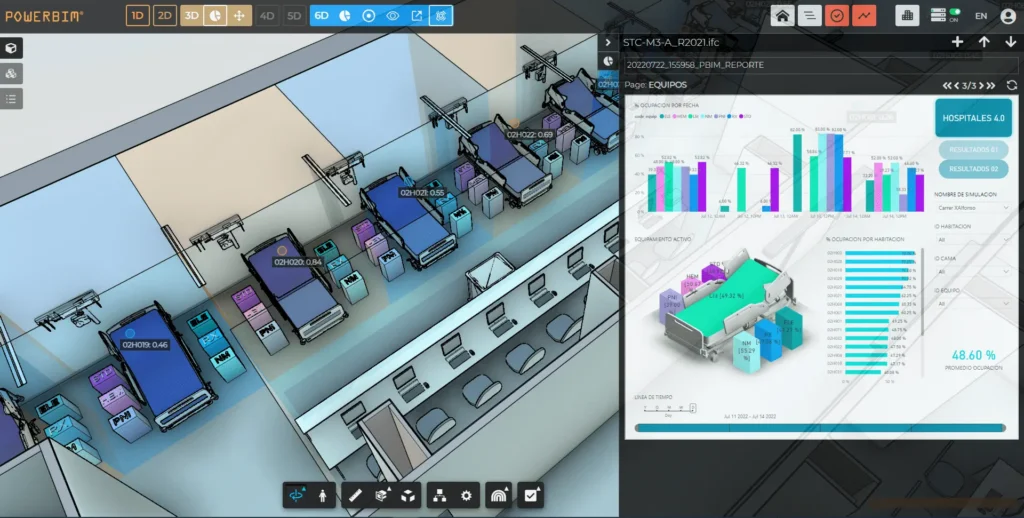
We joined forces with the work teams involved in the project to develop a pilot project for critical ICU spaces at Terrassa Hospital. We integrated a digital twin into POWERBIM that included boxes, spaces, and specialized equipment, connected to medical inventory, clinical histories, and technical maintenance information for the equipment. The ambitious goal was to predict future complications and needs, while also simulating possible alternative solutions. Thanks to technologies such as artificial intelligence algorithms, machine learning, and simulations, we can foresee the need and availability of boxes, beds, equipment, and resources required based on hospital admission pathologies, as well as predict and anticipate their availability. This achieves predictive maintenance, reduces corrective maintenance, optimizes operating costs, and improves healthcare and patient safety.
Tecnologías desarrolladas
Proceso simplificado que permite subir un modelo digital a la plataforma POWERBIM, extraer sus bases de datos en segundos y generar cuadros de mando ejecutivos. Los
usuarios pueden personalizar y reutilizar estas plantillas para múltiples proyectos.
Obtención instantánea de mediciones y presupuestos del proyecto desde el propio navegador, eliminando la necesidad de software 5D especializado. Permite recalcular costes automáticamente ante cualquier actualización del modelo BIM.
Integración pionera de tablas Excel alojadas en SharePoint con los componentes del modelo BIM. Permite a varios usuarios editar parámetros externos en tiempo real e integrarlos en la base de datos del activo digital.
Verificación de la calidad de los datos del modelo BIM mediante conjuntos de reglas configurables basadas en los Requisitos de Información del Cliente (EIR) o el Plan de Ejecución BIM (BEP), incluyendo comprobaciones de llenado de atributos en tiempo real.
Visualización analítica que permite a los técnicos filtrar los elementos por nivel, disciplina o zona, seleccionar componentes en el gráfico, aislarlos en el visor 3D y generar grupos de trabajo para su revisión colaborativa.
Módulo de comunicación colaborativa que permite crear, asignar y hacer seguimiento de incidencias directamente sobre el modelo 3D, exportando e importando informes en estándar BCF para la coordinación entre ingenierías.
Advantages
Three benefits, one a consequence of the other
Miguel Delgado, from the Polytechnic University of Catalonia, summarizes the impact compared to current asset and maintenance management systems as follows:
01
Reduction of Maintenance Costs
Optimal time windows for preventive maintenance are predicted, and the number of corrective interventions is reduced.
02
Increased Resource Availability
The mean time between failures increases, and the lifespan of critical beds, boxes, and equipment is extended.
03
Greater Operational Efficiency
A direct consequence of the previous two: lower operating costs for greater service availability.
Helena Pérez, from CadTech Ibérica, says:
Ultimately, any sector, hospital or otherwise, whose facilities are critical and depend on high-demand equipment, can benefit from these experimental development technologies within the scope of our project. HOSPITALS 4.0 also offers potential assistance to other areas of the hospital, such as reducing waiting times, improving the patient experience, and predicting future needs.
The Digital Twin, Inside Out
Platform Screenshots
Digital Twin as a Service
POWERBIM as an Integrating Platform
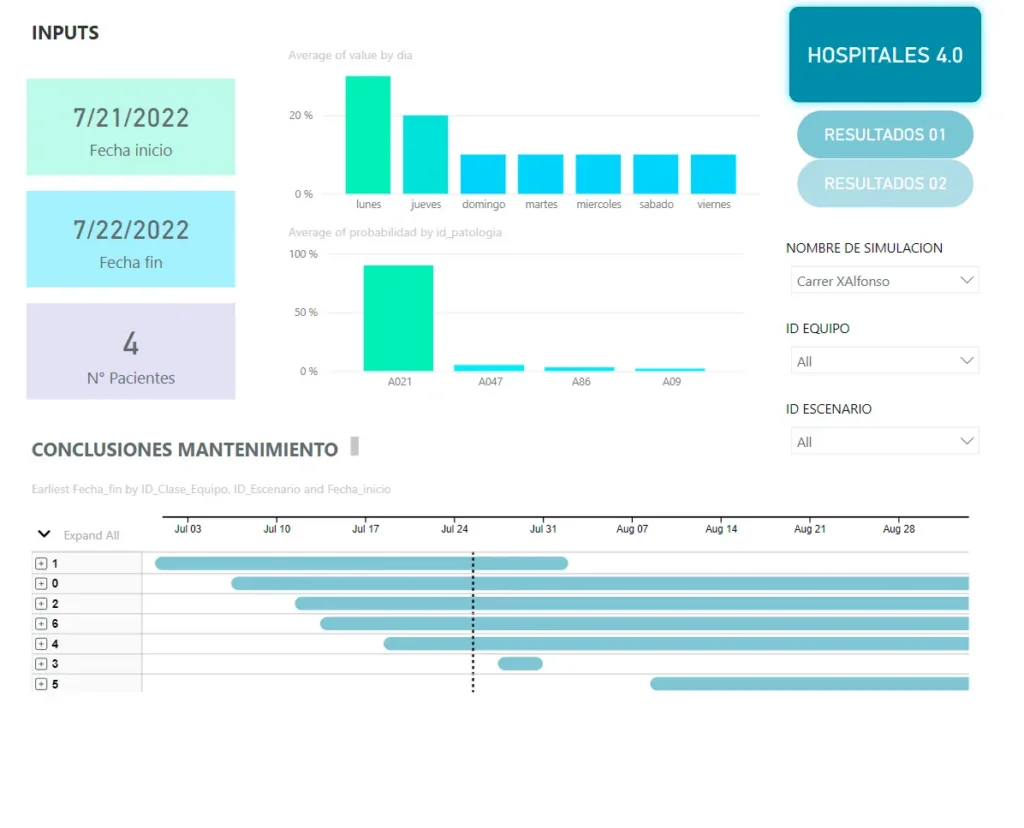
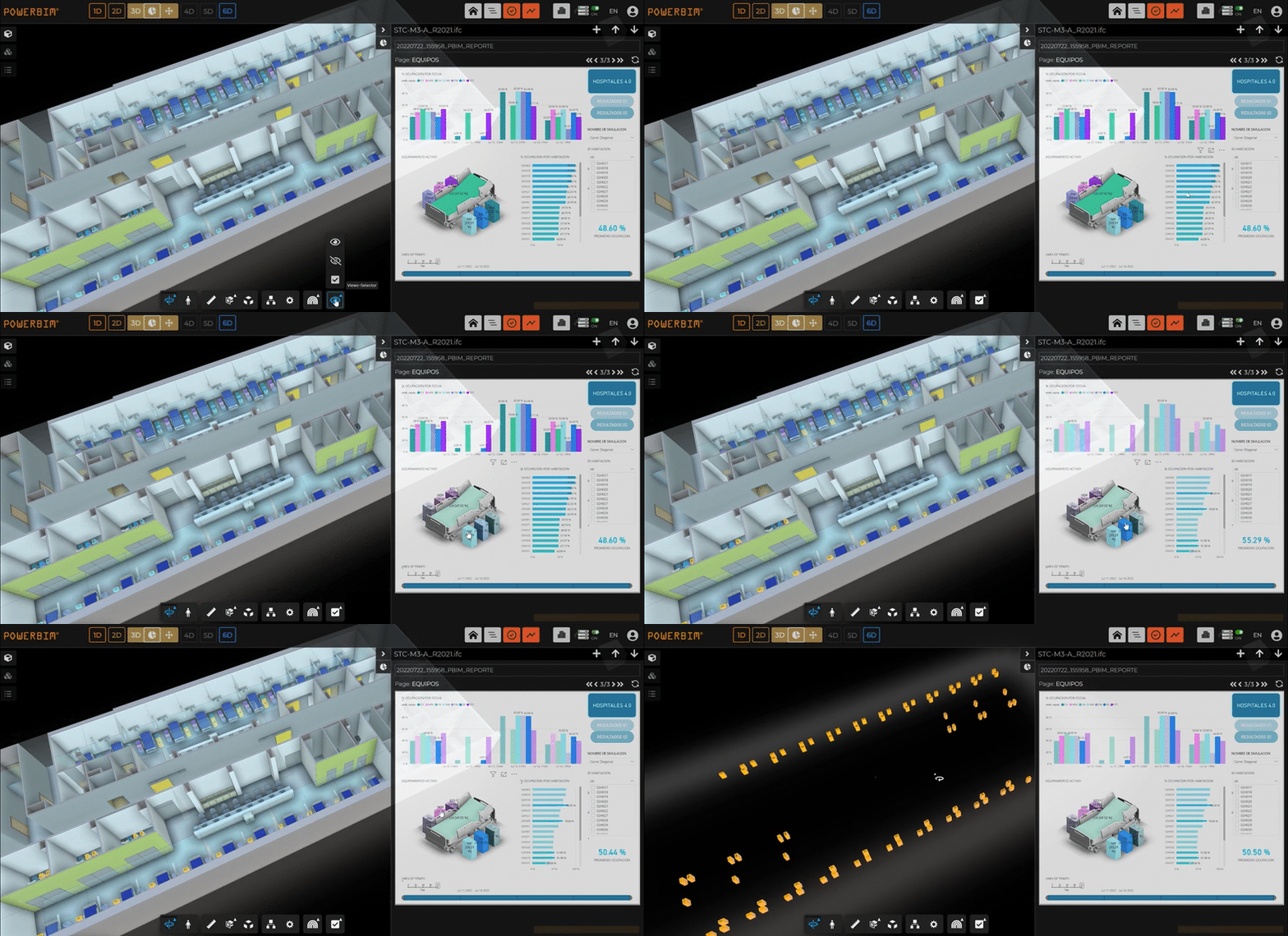
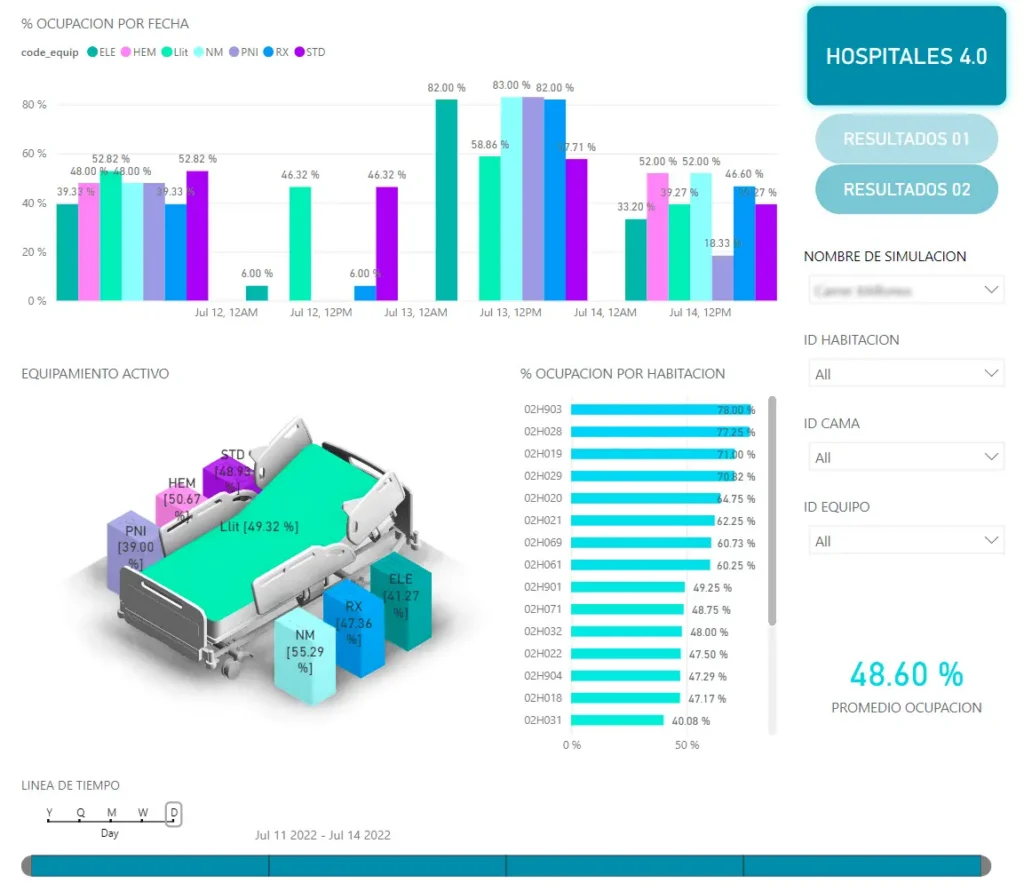
POWERBIM has served as the layer that structures and classifies all BIM information for the project, and the interactive database where simulations and results are cross-referenced.
One of its most powerful capabilities is creating custom analytics templates that automate the workflow and allow for ‘replaying’ the simulation along the timeline to compare, analyze, and decide.